

Custom Industrial Tote Box for Factory Material Handling and Logistics Organization
A project-specific material handling container solution for factory logistics, material organization and production workflow support, configured around material type, internal layout, stacking method, handling process and workflow integration.
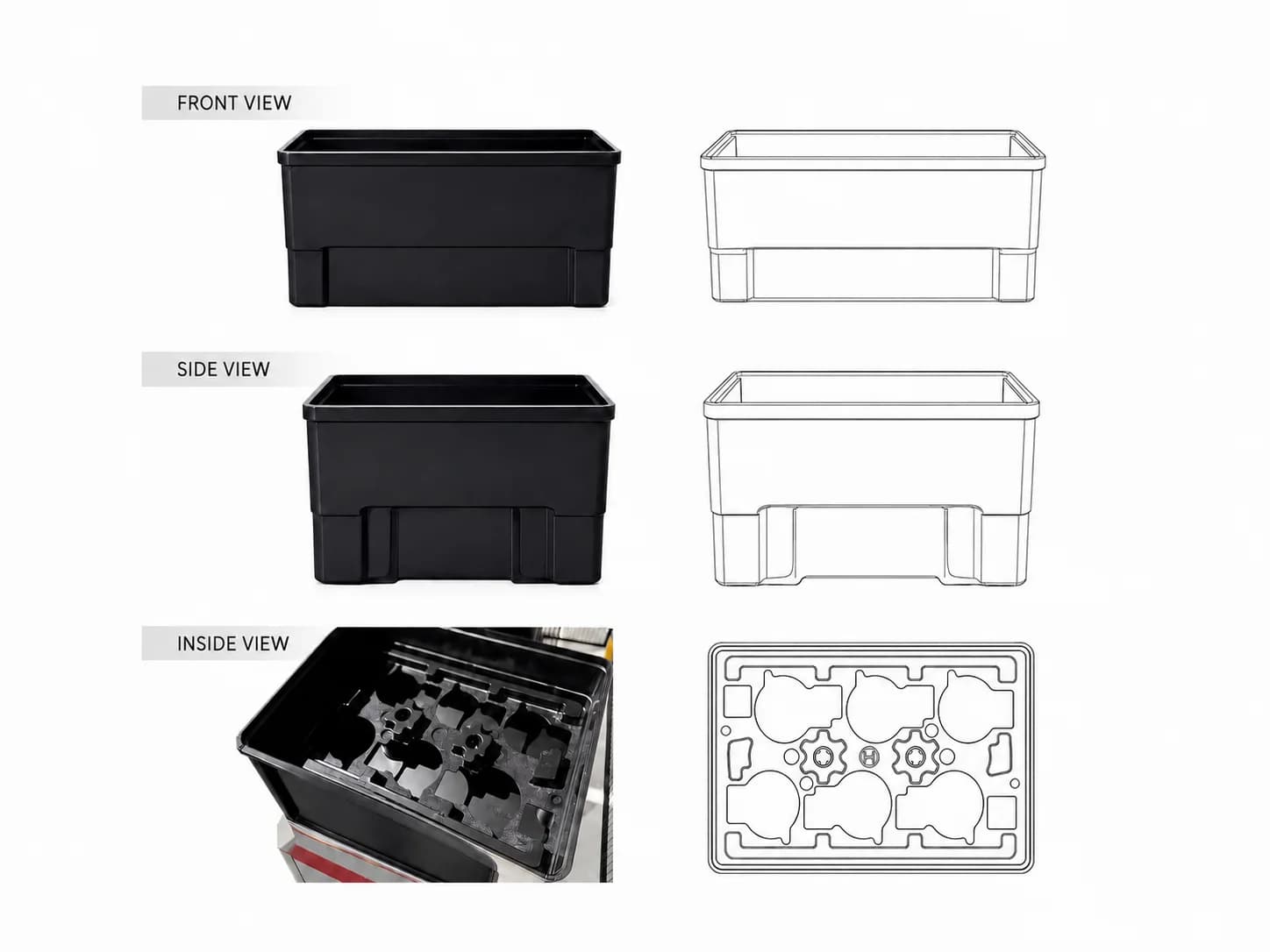
Product Visuals
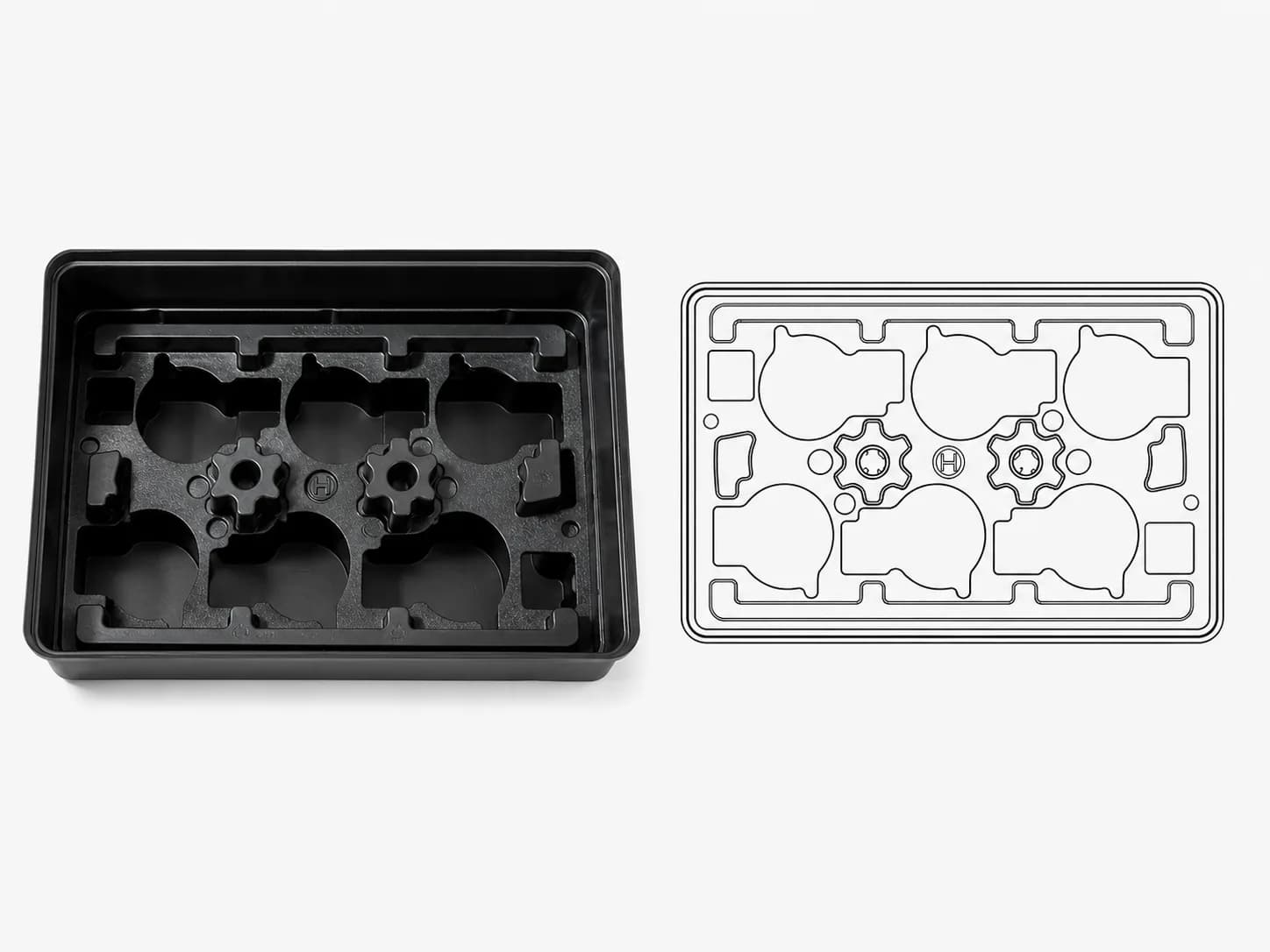
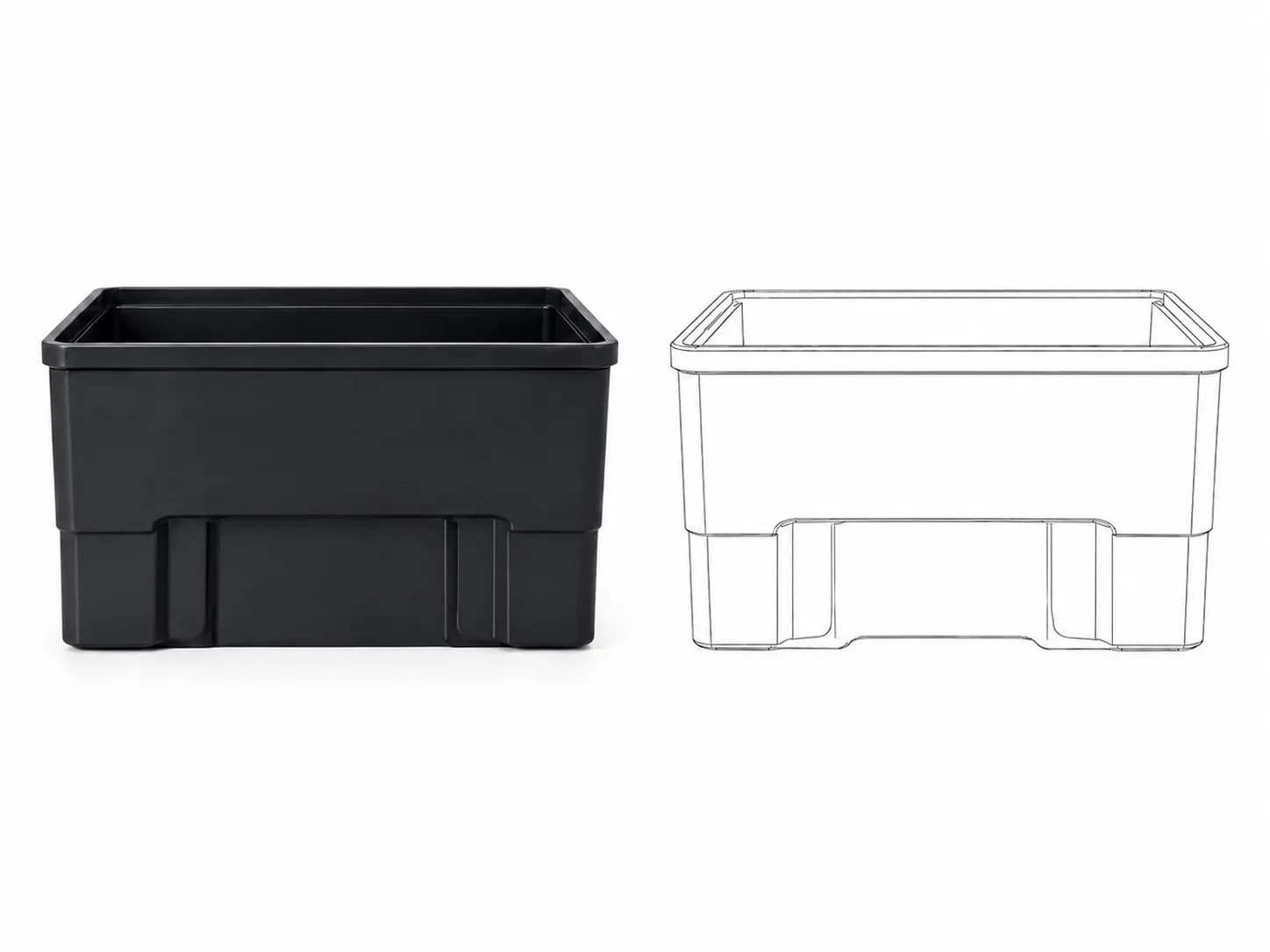
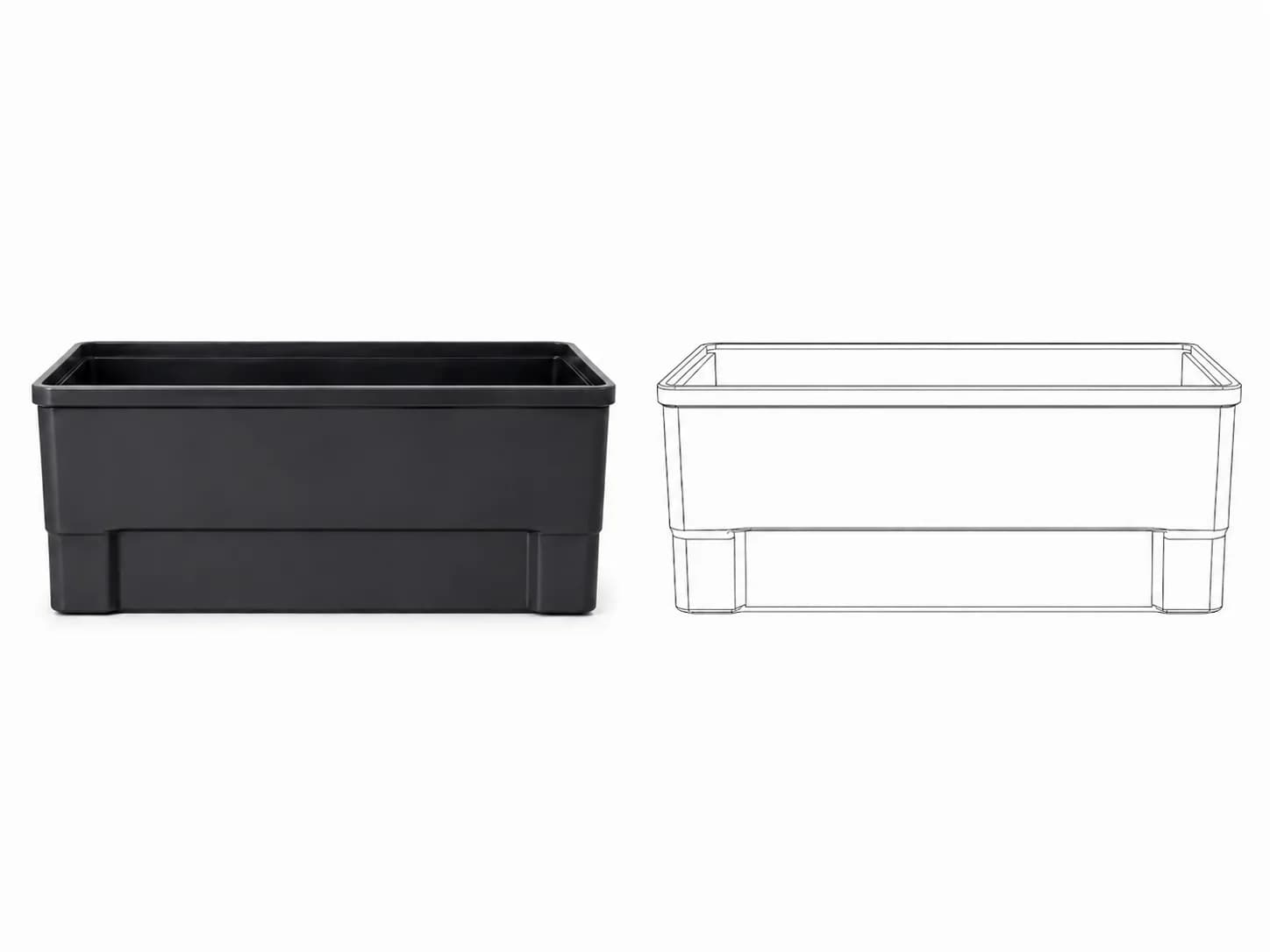
Product Video
Representative views of a custom industrial tote box, including molded interior configuration and real workshop application.
Engineered for factory material organization and logistics support
Custom industrial tote boxes can be developed around the dimensions, shape and handling requirements of customer parts. In addition to the outer box configuration, the internal cavities, dividers, supports and molded positioning structures can be customized to help organize, separate, position and protect parts during production, storage and internal material handling.
Final dimensions and internal structure should be evaluated according to the actual parts, loading method, stacking requirements and handling process.
Customer Challenge
Material dimensions, classification management, stacking efficiency and picking or placement workflows may be difficult to manage when containers do not match the production process.
Engineering Solution
A project-specific container solution reviewed around material type, internal configuration, positioning needs, stacking method, identification method, handling process and workflow integration.
Application Result
Improved material organization, better line-side supply efficiency, clearer internal logistics flow, stronger workshop management and more efficient production preparation.
Typical Customization Options
Tote box structure can be developed around the customer part geometry, loading sequence, internal protection needs and workshop handling process.
Part Positioning & Protection
Custom Molded Interior
- Internal cavities can be developed around the shape of customer parts
- Molded supports help separate and position components during handling
- Internal geometry can be designed to reduce unnecessary movement between parts
- Layout can be adapted to part quantity and loading sequence
Internal Organization
Divider & Support Layout
- Divider positions can be configured according to component dimensions
- Support points can be arranged around part geometry and handling needs
- Different zones can be created for multiple component types
- Layout can be developed for manual or process-specific loading
Size & Handling Adaptation
Outer Box Configuration
- Box length, width and height can be evaluated according to part and process requirements
- Wall and rim structure can be adapted to the intended handling method
- External dimensions can be coordinated with racks, carts or production-line interfaces
- Configuration can be developed around workshop logistics requirements
Project Evaluation Information
Providing part drawings, 3D data or physical samples can help evaluate the internal cavity layout, positioning points and tooling requirements.
Part Dimensions
- Part length
- Part width
- Part height direction
Part Shape / 3D Data
- Part drawings
- 3D data
- Physical samples
Quantity per Tote
- Parts per box
- Loading sequence
- Pickup direction
Required Positioning / Separation
- Internal cavities
- Divider layout
- Support points
Loading & Unloading Method
- Manual loading
- Process-specific loading
- Handling access
Stacking Requirements
- Storage method
- Warehouse organization
- Space planning
Rack / Trolley / Line Interface
- Rack interface
- Trolley interface
- Production-line interface
Internal Protection Requirements
- Part separation
- Positioning direction
- Surface protection need
Tooling Requirement
- Dedicated molded interior
- Final design confirmation
- Tooling evaluation
Engineering Evaluation
To propose a suitable tote box solution, we review:
- Part dimensions
- Part shape / 3D data
- Quantity per tote
- Required positioning / separation
- Loading and unloading method
- Stacking requirements
- Rack / trolley / line interface
- Internal protection requirements
- Tooling requirement
Key Features
Custom Molded Internal Structure
Internal cavities, dividers, supports and molded positioning details can be developed around customer parts and handling requirements.
Material Flow Organization
The container solution is reviewed to support clearer material classification, picking, placement and turnover processes.
Part Positioning and Separation
Internal layout can be evaluated to help organize, separate and position parts during production, storage and handling.
Workflow-based Container Design
Container handling, line-side supply and workstation usage are reviewed according to the production workflow.
Engineering Drawing Confirmation
Container structure, internal configuration, identification position and manufacturing direction are confirmed through project drawings.
Engineering Application Scenarios
Production-line Part Circulation
Used for line-side components or work-in-process items where tote configuration needs to match production workflow.
Dedicated Handling for Shaped Components
Supports shaped components that need project-specific internal cavities, dividers or support points.
Rack and Trolley Integration
Helps factories coordinate tote boxes with racks, trolleys, workstations and internal movement routes.
Project Process
Requirement Review
Understand material type, workflow, storage requirement, handling method and production usage scenario.
Engineering Evaluation
Review container structure, internal layout, stacking method, handling requirement and workflow integration.
Drawing Confirmation
Confirm container structure, internal configuration, identification position and project details before manufacturing. Where a dedicated molded interior is required, tooling can be developed according to the confirmed part geometry and final design.
Manufacturing & Assembly
Fabrication, assembly and quality checking based on the confirmed container solution.
Delivery Support
Provide export coordination, packing support and communication during delivery.
Why Choose Our Engineering Approach
Requirement Analysis
We review material flow and handling requirements, storage process, line-side usage and internal logistics needs before proposing a direction.
Mechanical Design
Container structure, internal configuration, positioning details, stacking method and identification layout are configured according to project conditions.
Manufacturing & Assembly
Custom fabrication, assembly and quality checking are coordinated around the confirmed container design and application requirements.
Delivery Support
Overseas communication, packing coordination and delivery planning can be supported for industrial material handling container projects.
FAQ
Can the tote box size and internal layout be customized?
Yes. Container dimensions, internal layout, separation method and positioning details can be reviewed according to the material and handling workflow.
Can the container be designed for specific parts or materials?
Yes. The container can be evaluated around component shape, material characteristics, protection needs, picking method and production usage.
Can stacking and storage requirements be evaluated?
Yes. Stacking method, storage layout, warehouse organization and space utilization can be reviewed during engineering evaluation.
Can it be used for production line material supply?
Yes. Line-side supply, workstation usage, material flow and container compatibility with handling equipment can be evaluated according to the production process.
What information should I provide for engineering evaluation?
Please share material type, component dimensions or photos, storage method, stacking needs, handling process, transport method and any available layout information.
Can drawings be confirmed before manufacturing?
Project drawings can be prepared after the container structure, internal layout, stacking method and identification requirements are clarified.
Share Your Material Handling Container Requirements
Provide your material type, component form, internal layout needs, stacking method, handling process, storage conditions or site photos. Our engineering team will review your application and suggest a suitable container solution.